Dubai Hills in Figures: Slowing Demand, Falling Rents, and a Potential 15–20% Price Correction
Decided to run the numbers from Dubai Land Department (DLD) transactions in Dubai Hills to review the dynamics and long-term potential of the community.
For context, I own a one-bedroom apartment in Dubai Hills that I purchased in 2023 with a mortgage. Below are some of the latest observations.
1. Purchase Demand Peaked in Mid-2024 and Has Been Gradually Fading
There was a significant spike in property purchases during mid-2024, largely driven by off-plan buyers targeting 1–3 bedroom apartments.
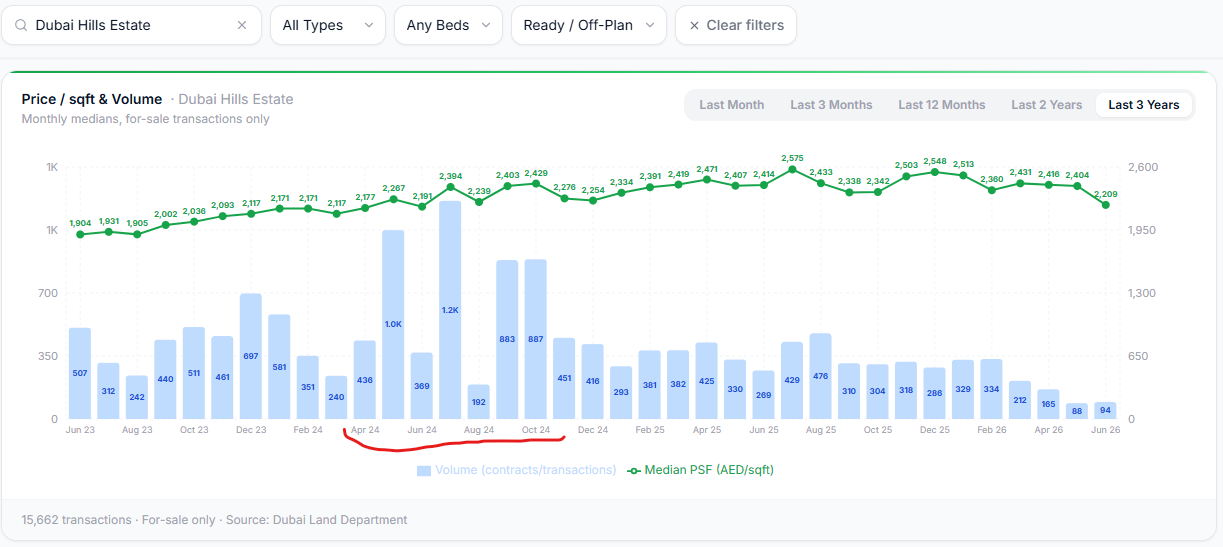 ExpandTransaction volume dynamics for Dubai Hills — last 24 months
Since then, transaction volumes have softened, although pricing has remained relatively resilient. Average sale prices are still hovering around AED 2,200 per sqft.
2. Rental Demand Remains Healthy, But Pricing Power Is Weakening
Demand for rentals is still strong, however rental rates have been declining over the last three months amid regional uncertainty.
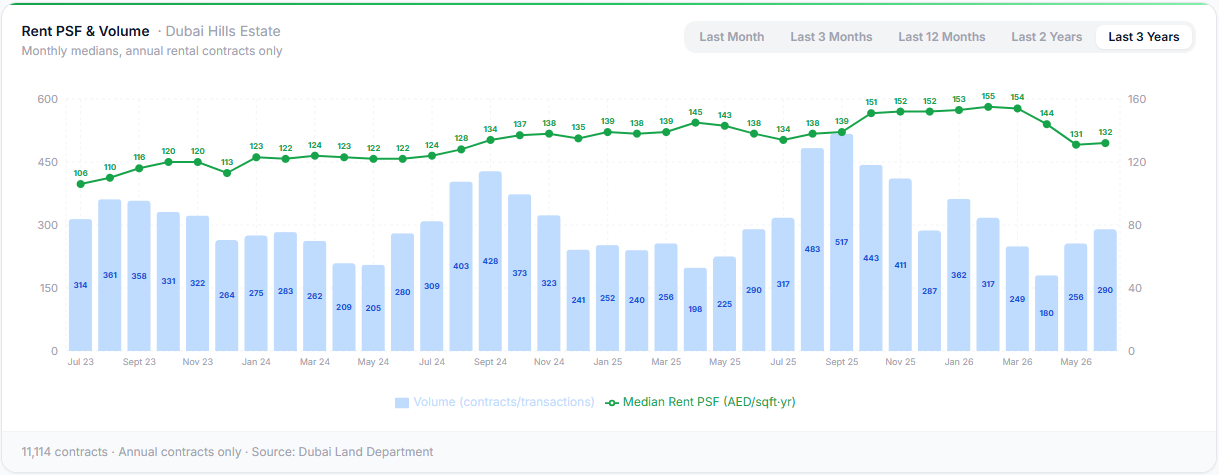 ExpandRental rate trends in Dubai Hills
Average rents have dropped from approximately AED 160/sqft to AED 130/sqft, representing around a 20% decline in contract values.
We're starting to see more competition among landlords, giving tenants greater negotiating power.
3. A Large Share of Recent Transactions Comes from Projects Delivering in 2029
Roughly 30% of all transactions over the last 12 months came from Rosehill and Vida Residences Hillside, both of which are scheduled for completion in Q2 2029.
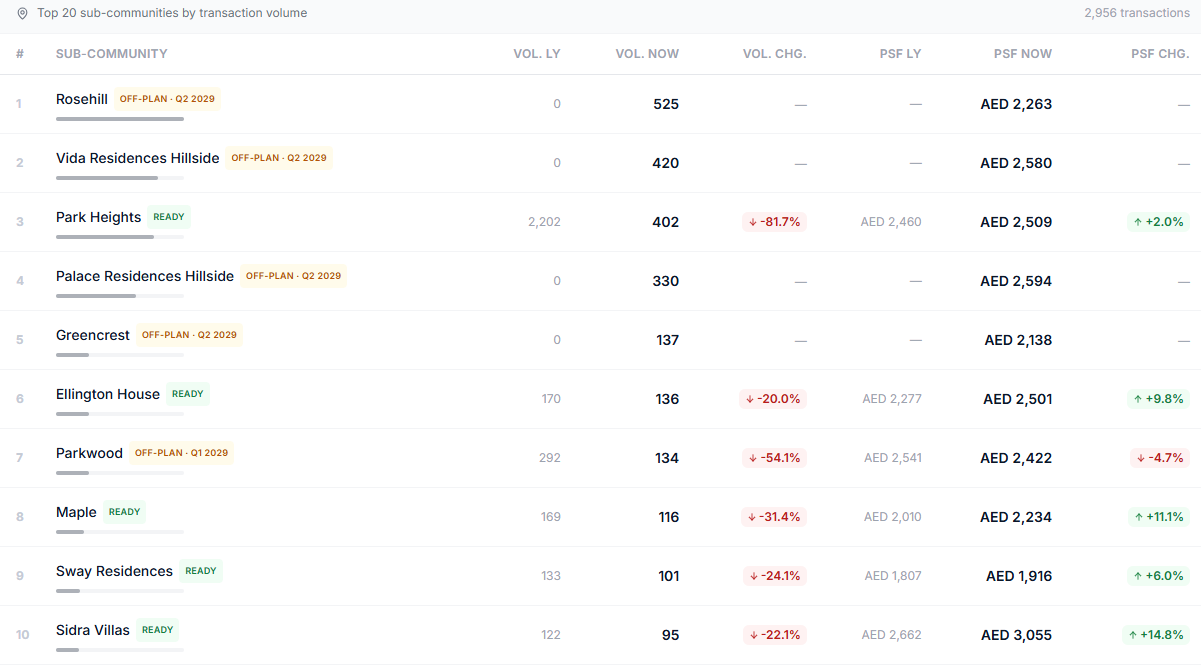 ExpandTransaction breakdown by sub-community — last 12 months
Rosehill — breakdown by number of bedrooms
Around half of all transactions were for one-bedroom units.
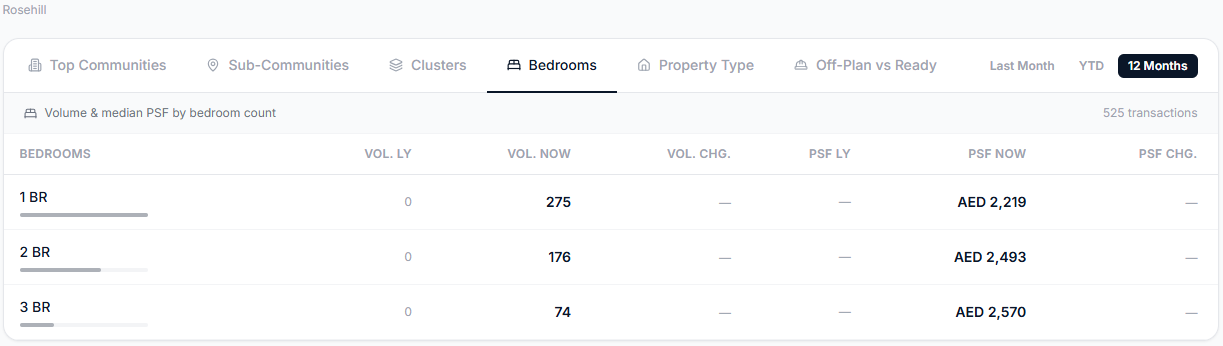 ExpandRosehill transactions by bedroom type
Vida Residences Hillside — breakdown by number of bedrooms
Similarly, approximately half of all transactions were one-bedroom apartments.
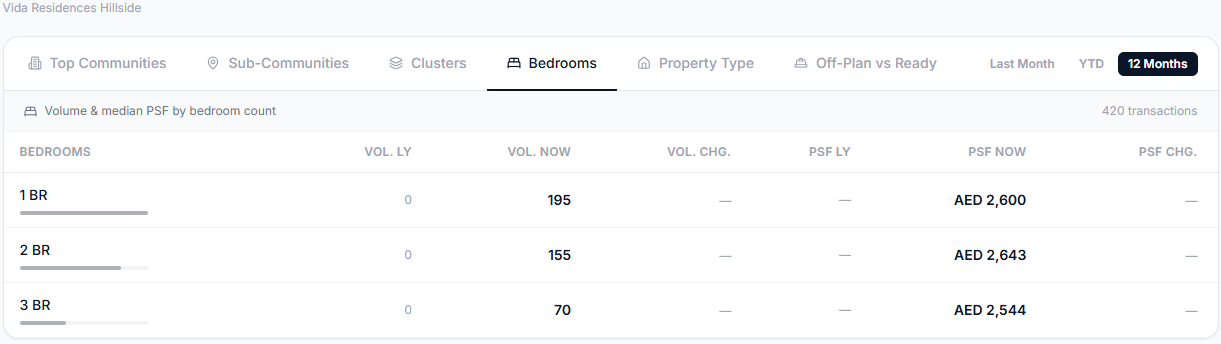 ExpandVida Residences Hillside transactions by bedroom type
My Takeaway
Dubai Hills remains one of Dubai's most desirable master communities, but the amount of incoming supply is becoming increasingly difficult to ignore.
As more apartments enter the market, maintaining current pricing power will become more challenging. Continued pressure on rental rates would reduce yields, making the community less attractive for yield-focused investors.
If rental yields compress further, investors are likely to demand lower entry prices to achieve target returns. In that scenario, I wouldn't be surprised to see apartment prices gradually adjust downward by 15–20% over the coming years.
If you're interested, I could prepare another breakdown of the community and share some additional insights from the DLD data.